
Utility Works Traffic Control in Melbourne
Utility works traffic control in Melbourne supports power, water, gas, and telecommunications projects on tight permit windows and changeable scopes. Traffic management must mobilise quickly, adapt mid-job, and coordinate with utility crews, councils, and Department of Transport and Planning — often simultaneously.
Key takeaways
- Utility works (power, water, gas, telco) compress major operations into tight permit windows.
- Traffic management has to mobilise quickly, adapt to scope changes mid-job, and coordinate with multiple stakeholders.
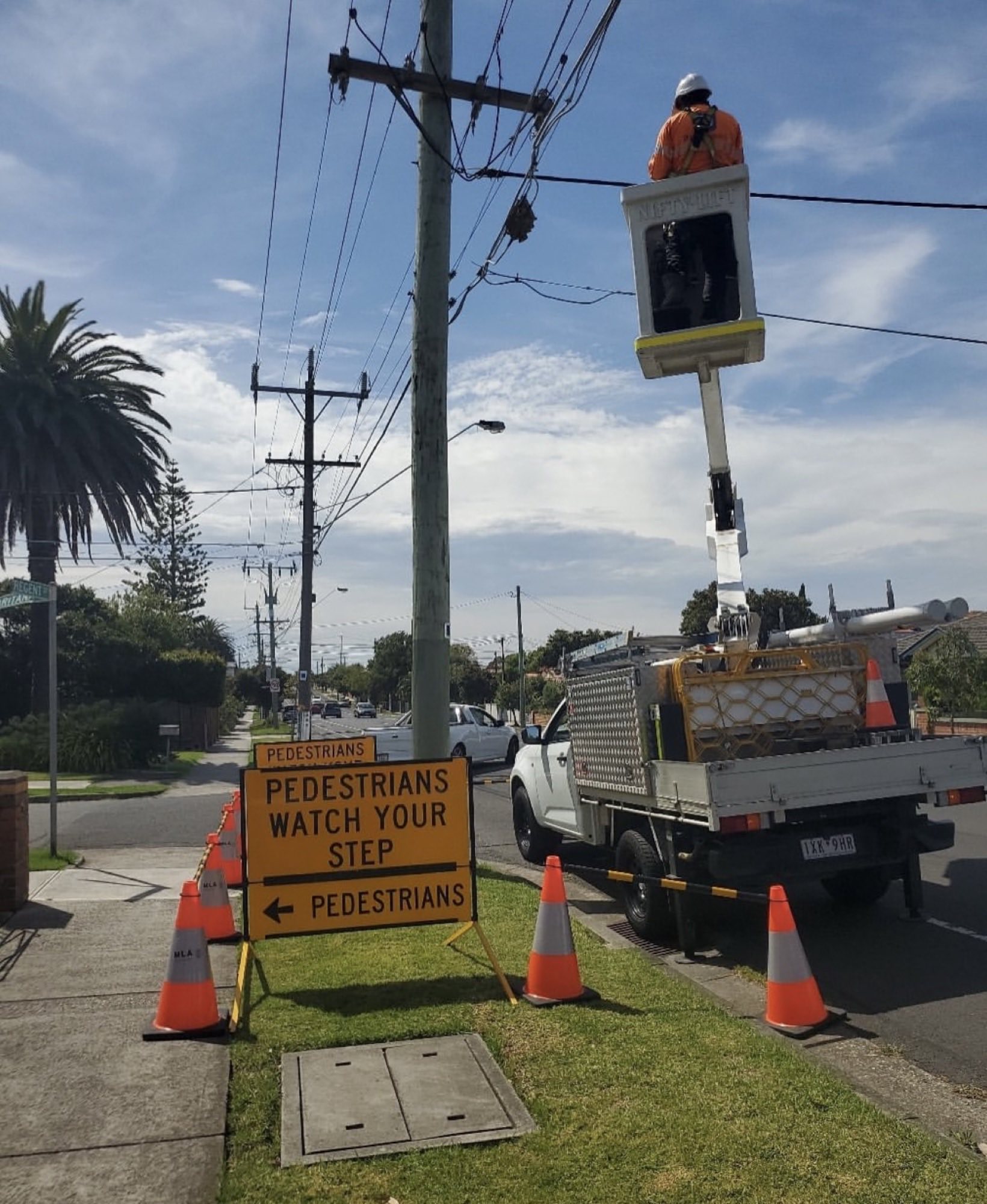
- Overhead works (cherry pickers, EWPs) need exclusion zones above and below — both must be in the TGS.
Why are utility works different?
Utility works are typically constrained by permit windows (often a single night or a tight day shift), by the utility crew's own scheduling, and by sudden scope changes (unexpected pipe conditions, additional pole work). Traffic management has to flex with them.
What's special about overhead works?
Overhead works (cherry pickers, elevated work platforms) need exclusion zones above and below — the TGS must address both the elevated worker and the ground-level vehicles passing beneath. Tilt-up cherry pickers also need wider footprints than people expect.
How do utility permits differ from civil permits?
- Utility-specific Memorandum of Authorisation requirements for VicRoads-managed roads
- Telecommunications carriers (NBN, Telstra, Optus) often have their own coordination requirements
- Power network operators (CitiPower, Powercor, AusNet, Jemena) require specific traffic management protocols near live lines
- Water utilities (Yarra Valley Water, City West Water, South East Water, Greater Western Water) have their own preferred contractor lists
What about night utility works?
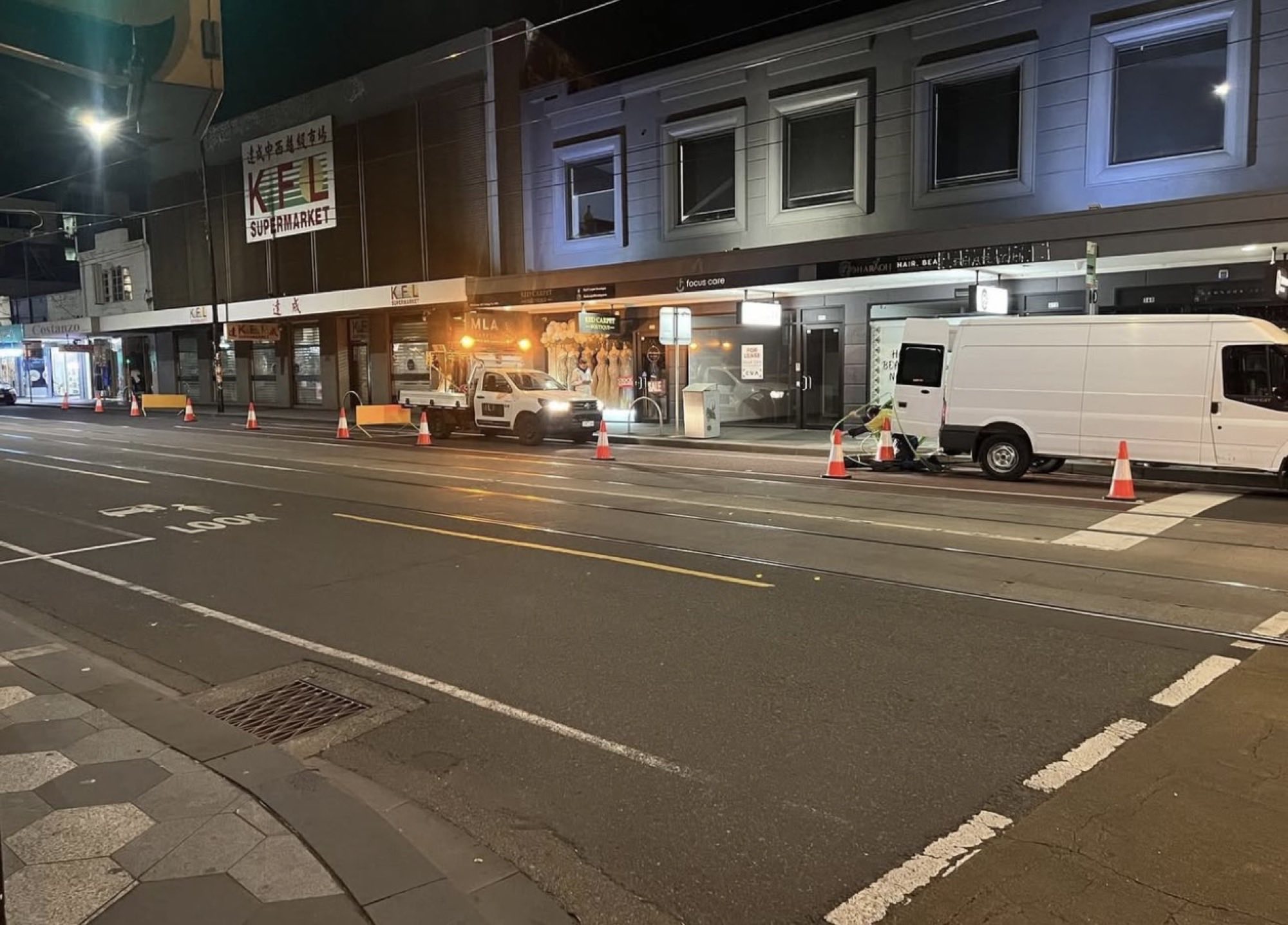
Power outages and major water main work often happen at night to minimise consumer disruption. Traffic management runs longer shifts, with floodlighting, illuminated VMS, and full reflective PPE — see the dedicated night roadworks guide.
FAQ
Frequently asked.
- How quickly can you mobilise for a utility emergency?
- Under 2 hours within metro Melbourne for confirmed callouts. Faster if our crew is already in the area.
- Do you work directly with utility contractors or via the principal?
- Both — we work direct with utility crews and through principal contractors. Either way we coordinate with the relevant network operator on protocols.
Related services
Written by
Damian Reale
Operations Manager, MLA Traffic
Operations Manager at MLA Traffic and MLD Corporation. Damian works across crew coordination, on-site compliance, equipment logistics, and permit pathways with VicRoads and Melbourne councils.
LinkedInKeep reading
Related posts.
Need traffic management fast?
Day or night, metro or regional Victoria — we're ready. Call now or request a quote online.